Course Design & Development
About the project
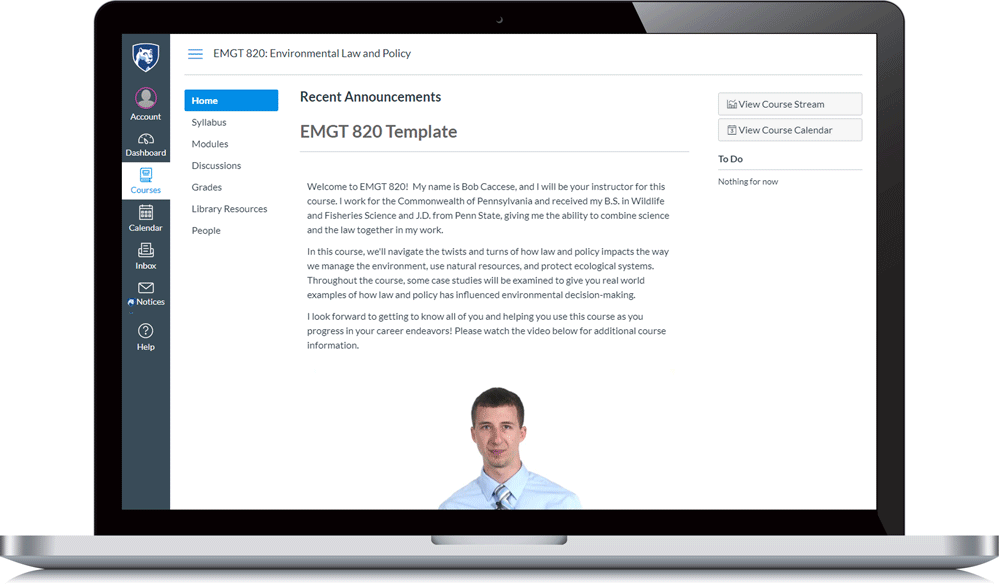
EMGT 820 is a graduate level course I helped develop in 2017 for Penn State University’s College of Agricultural Sciences. It was the first time the instructor had ever taught or developed a course. Using a backward design approach, I guided the instructor through several phases of design and development.
Course Design Process
During this phase, I assisted the instructor in creating measurable objectives and in identifying and sequencing course topics (modules).
After reviewing various types of summative and formative assessment options, I asked the instructor to come up with tentative assessment activities that could be used to measure student achievement of the learning objectives.
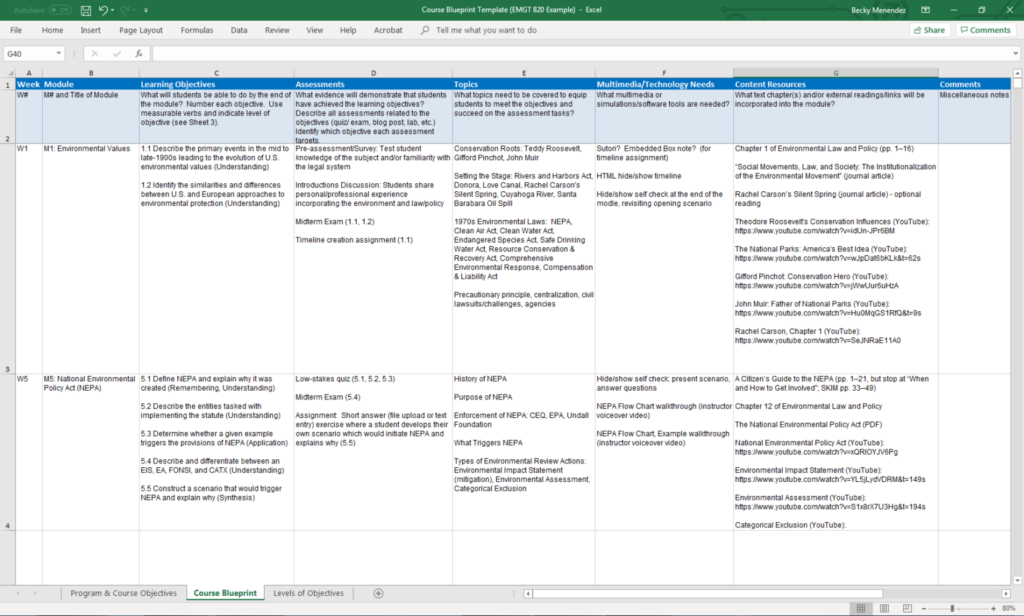
From there, the instructor worked on filling out a course blueprint, identifying key content, resources, and activities that would support students in achieving each module’s learning objectives.
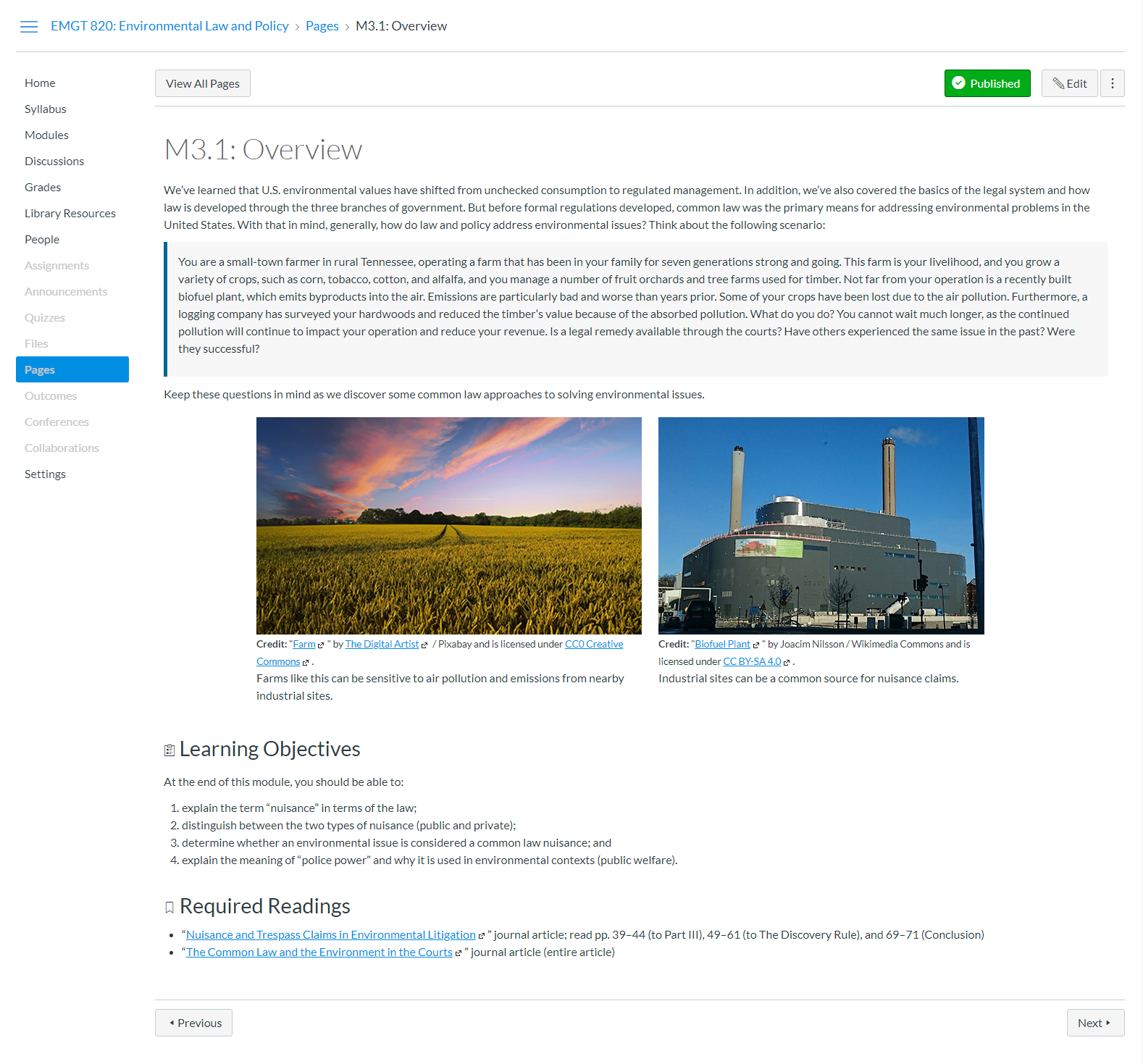
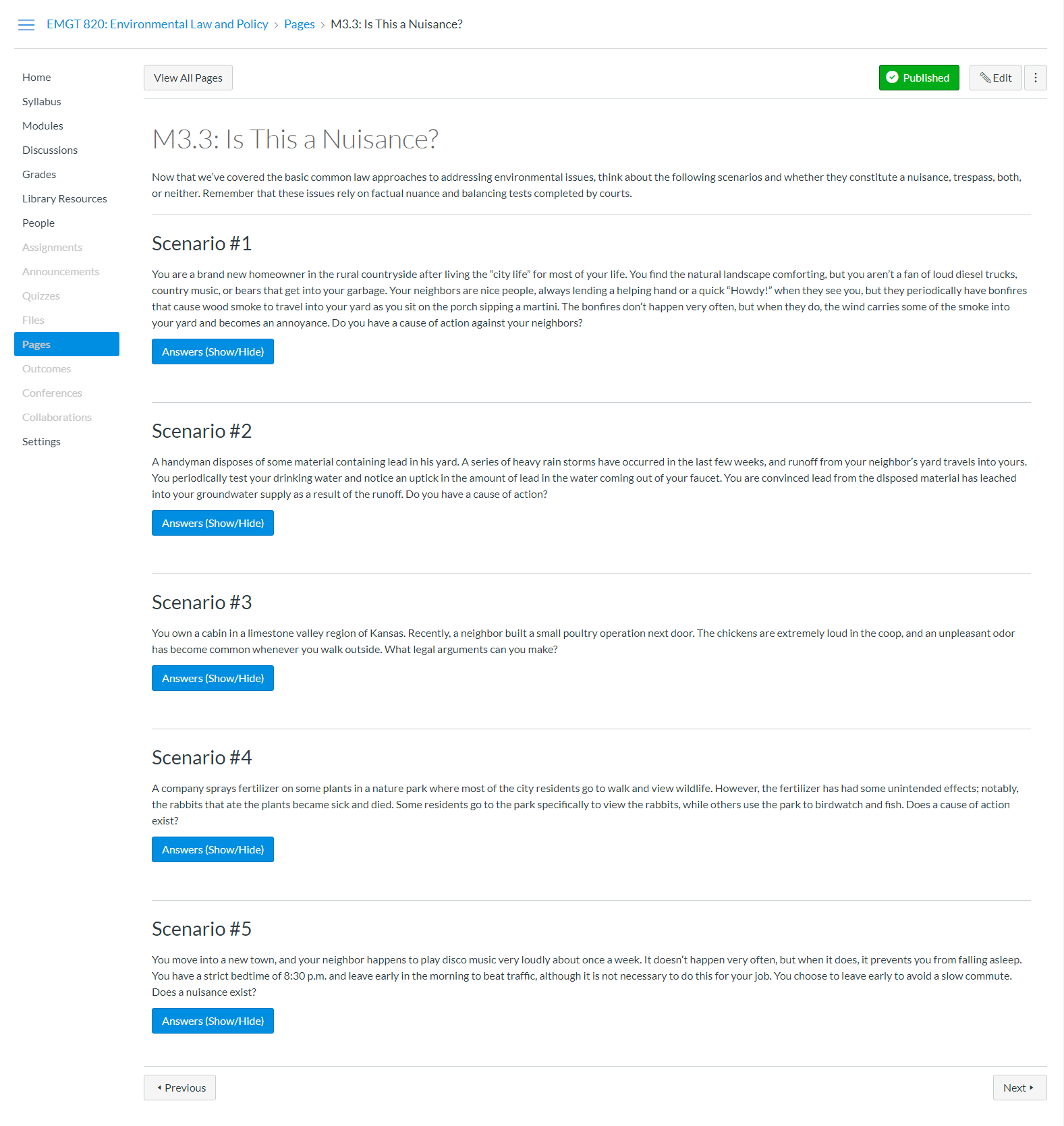
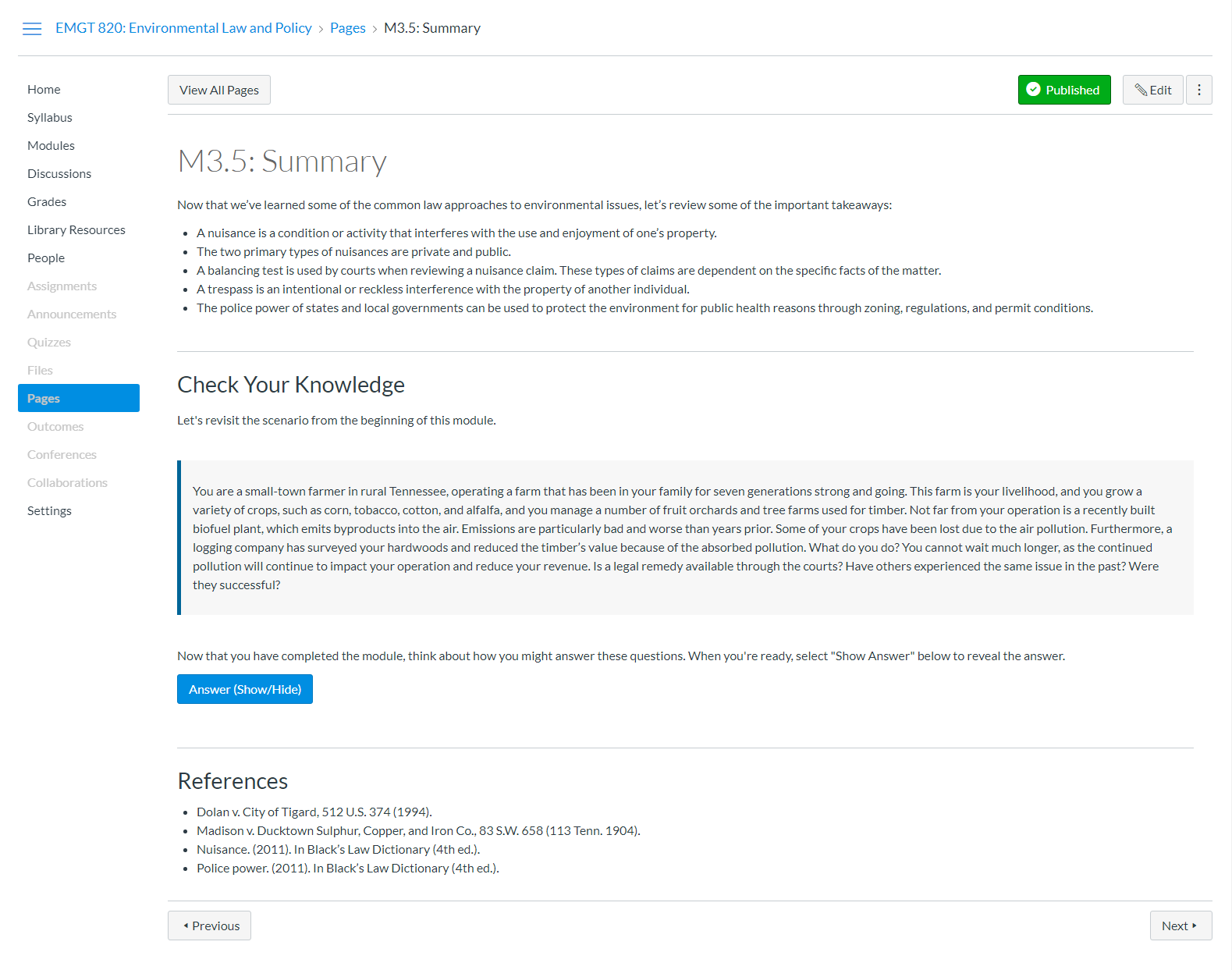
In this stage, we began a cycle of content development in which the instructor would write out the overview and content pages for each module and submit them for review. I would submit the content for proofreading while also reviewing the content myself to ensure alignment with the module objectives. I also collaborated with our multimedia specialist to make recommendations if we noticed places where the content could be enhanced by multimedia.
While we reviewed the content from the submitted module, the instructor would continue putting together content for the next module. During the following meeting, he would submit the next module’s content, and we would go over any questions or recommendations we had for the previously submitted module.
Once content for a module was finalized, we began building the module in Canvas, ensuring copyright and accessibility compliance, while we continued to receive and review new content for new modules.
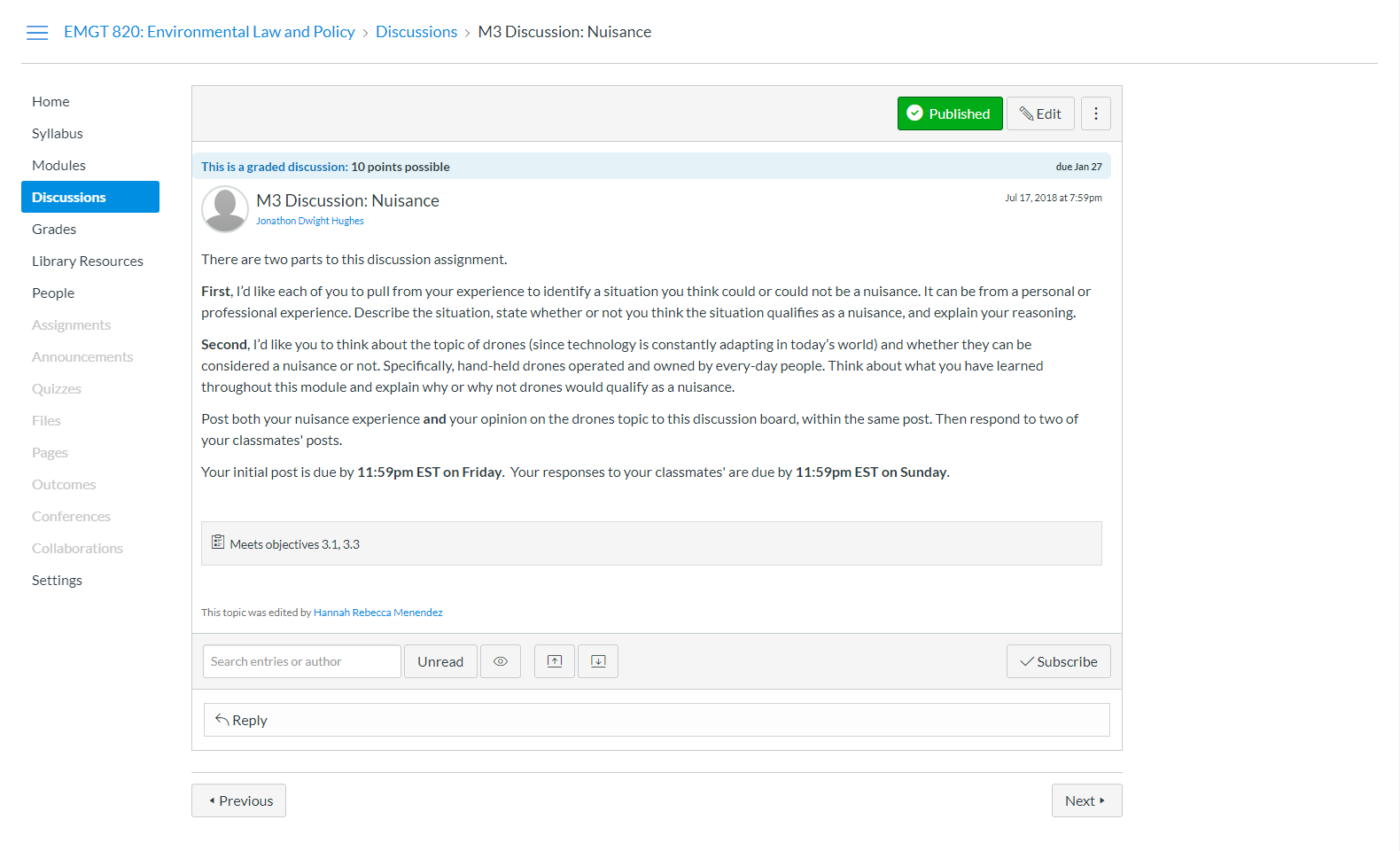
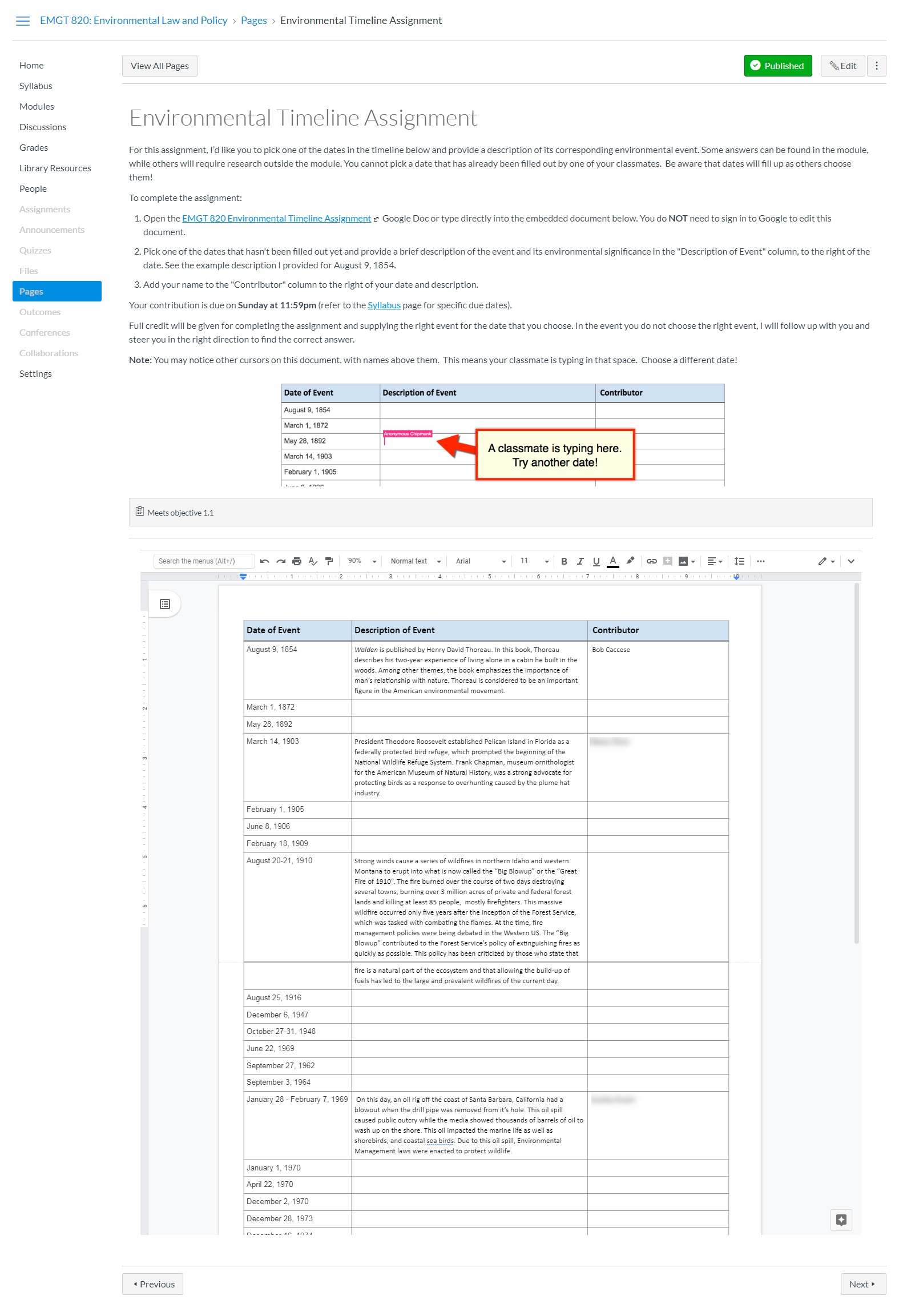
Once content had been developed for each module, we circled back to the assessment ideas the instructor had generated during Phase 1 and finalized our assessment selection. The instructor was tasked with writing any quiz/exam questions, determining criteria for assignments, and writing instructions.
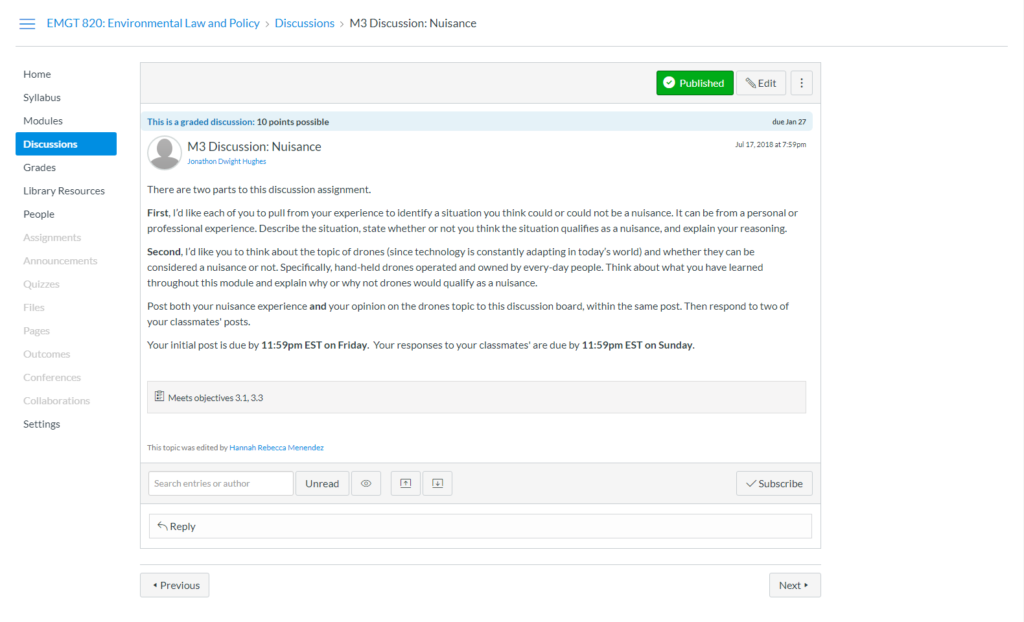
I assisted the instructor by showing him the various setup options for quizzes, assignments, and group projects in Canvas, again ensuring alignment with intended learning objectives, and then built the assessments themselves in Canvas. I also assisted the instructor with creating rubrics for assignment using the criteria he had identified.
This final phase was used to complete any remaining course build or multimedia development tasks, while the instructor worked on finalizing a syllabus, customizing his orientation quiz, and recording his course introduction video. I set up any required course reserves with the library, and conducted a final review of the course to make sure everything was in working order.